Rose and Rosewater
As you may know, Muslim from around the world these days have gathered in Mecca for pilgrimage known as Hajj. The upcoming Friday is a religious holiday called "Qorban". May this holiday be a day of peace and friendship for all humankind!
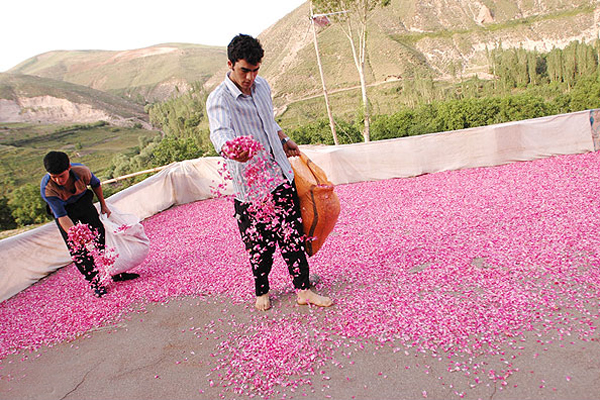
According to the tradition to prepare for the great religious ceremony each year, Kaaba is washed with rosewater. Today the washing process is finished and the new covering is being installed. About 40 tons of pure rosewater is consumed for this purpose.
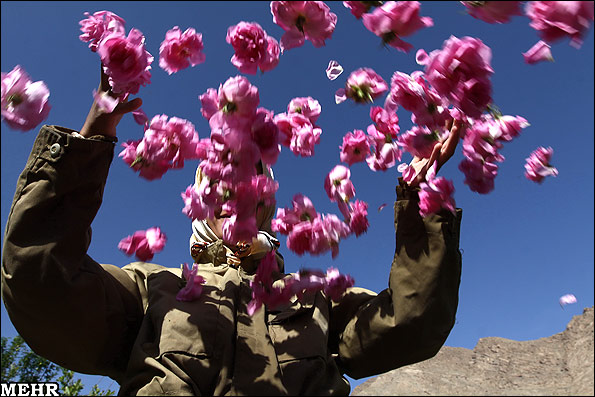
The rosewater is produced in Iran in a region close to the beautiful and touristic city of Kashan. Kashan is located about 250 km south of Tehran. For more information about Kashan you may visit this website. Each spring there is a famous rosewater ceremony close to Kashan that attracts tourists.
Roses and rosewater play a prominent role in Iranian culture. I have heard various legends showing the affections of both Prophet Mohammad (PBH) and Zoroaster to rosewater. However, I should say that these are merely legends and may not be historically valid. Anyway, these legends have contributed to high esteem that traditional Iranians show to this flower and its scent. Because of these legends in persian or Farsi (the official language of Iran) this kind of rose is called "Mohammadi." In my mother language (Azarbaijani Turkish which is the language spoken in Tabriz) it is called "Ghizil ghul" which literally means "gold flower."
Rosewater is widely used for cookery and making traditional desserts and jams, each region of Iran with its unique and specific style. I will write about its culinary uses in another post.
Here I want to mention about Rose festival in Ganbarf which is a region close to Tabriz and Oskoo. This festival takes place in July and also includes traditional music and performances. Photos below are related to this festival. The statue that you are seeing here is an archeological piece. I do not know how old it is. In the region of Ganbarf you can see many such ancient items.