Kids from earthquake--devasted area close to Tabriz

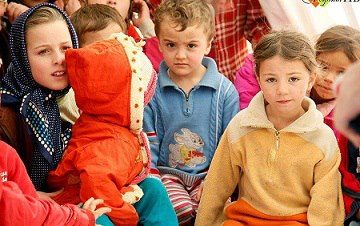
In August 2012, a deadly earthquake hit Varzaghan area in Eastern Azarbaijan province. Varzaghan is  located about 75 km far from Tabriz. The death toll was overwhelming! This is a photo of the kids whose village was ruined.  

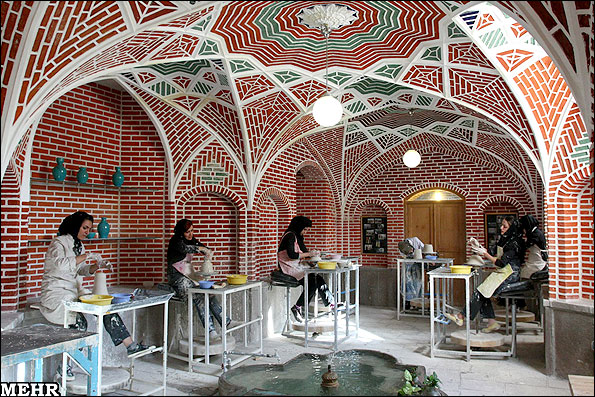
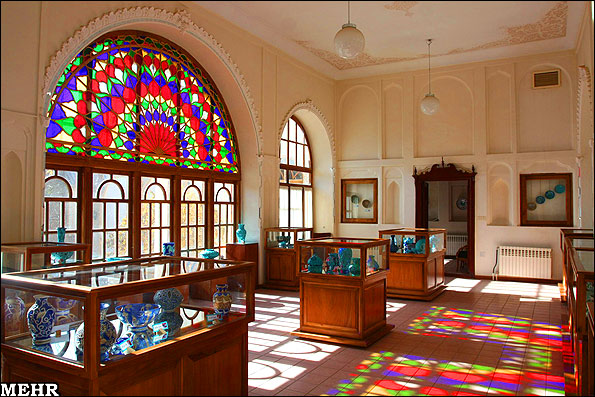
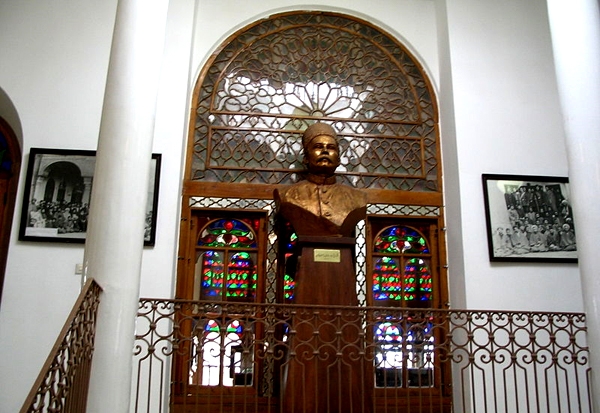
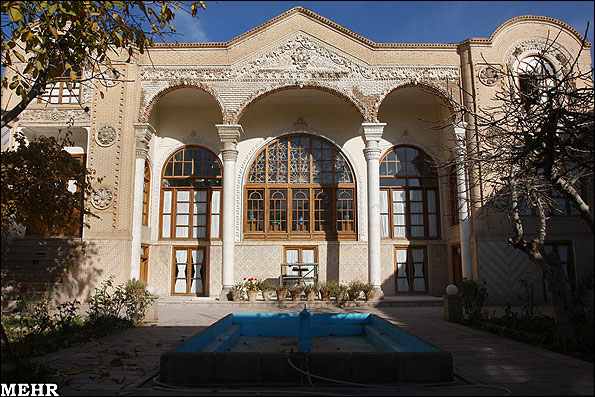
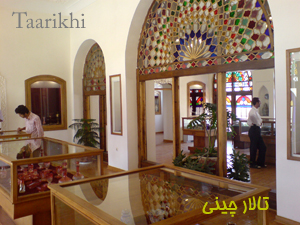
Old houses in Tabriz converted to museums

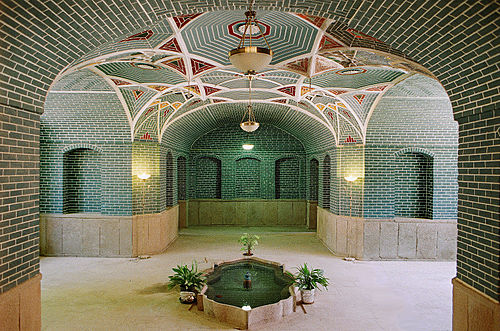
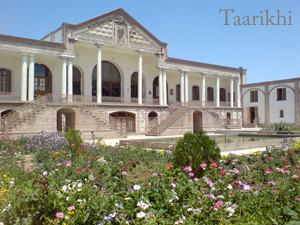
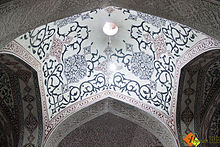
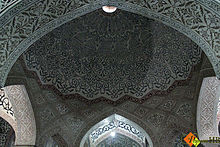
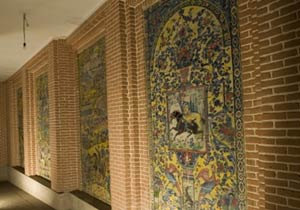
These are photos of some old houses in Tabriz that in recent years have been converted to museums:

PS. I have found the photos from the internet. As far as I could I acknowledged the courtesy of the photographer or the original website that it was posted.
However, unfortunately in a few cases I could not trace back where the original source was because so many sites had posted them without giving reference to the original one.

This happens in physics research too. After a while a result or formula becomes so famous that only a few care about citing,
One of the ways to honor an establish emeritus professor is to say some of his papers have become "Classics" so we use its results without even citing!!
(A clever excuse!)

Kordasht public bath-house

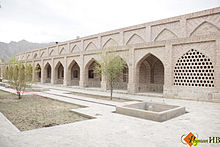
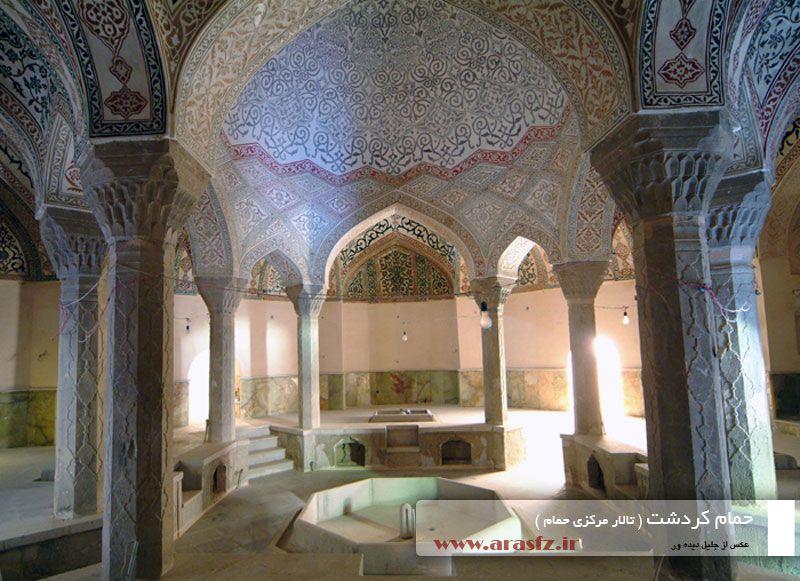
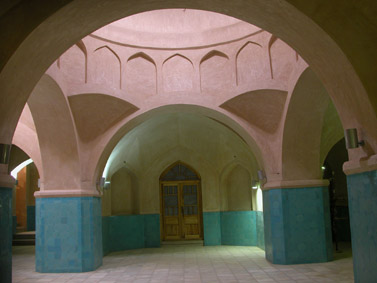
These photos of another historic public bathhouse located in Kordasht, about 100 km north of Tabriz in Jolfa region. The bathhouse is built during the Safavid dynasty. There is also a historic castle close to it.


Nobar public bath-house

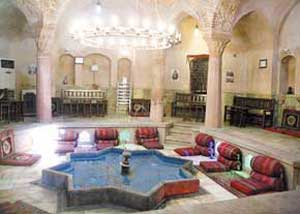
The following photos show a historic public bathhouse in "Nobar" district of Tabriz that nowadays is converted to a coffee-house:

Bridge

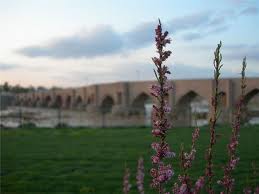
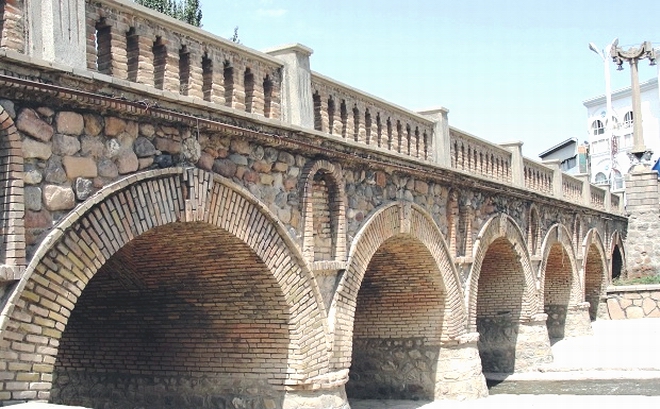
This is a bridge located in the west side of Tabriz built over "Aji chaai" which literally means "bitter river."  The bridge is more than 500 years old and built before Safavid dynasty.  You may see this bridge when you head from the airport towards the downtown.

 Talking about bridges I remembered this saying

Build bridges instead of walls and you will have a friend.  

This sounds like a proper motto for this blog, too. Building bridge across cultures by blogging.


Zeinab Pasha, the great female justice fighter

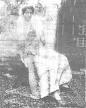
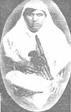
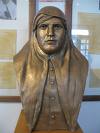
Photos that you see belong to a Tabrizi woman famous as "Zeinab Pasha" who about 130 years ago fought for the rights of the poor and social justice. She had trained an army of female partisans and commanded them. Her tactics, her courage, her determination for the cause of establishing social justice and her mercy on those opponents who repented are immortalized in several  long ballads composed in Azarbaijani Turkish (the language spoken in Tabriz).  

According to these ballads, Zeinab Pasha started her combat for justice from this bridge in Tabriz which is called "Ghaari Korpi." Ghaari in Azarbaijani Turkish means "old lady." According to the urban legends this old bridge is built under the auspices of an old anonymous lady who demanded to remain unknown. From my early childhood, for an unknown reason, I loved this bridge. Anytime I visit my hometown I try to take another look at it. When I was a child cars passed over it but now it is open only for pedestrians. There is another bridge next to it called "Mansure korpusi" which is decorated by some horse statues.


When Zeinab Pasha got old, she traveled to Iraq for pilgrimage. Over there, bandits stopped their caravan. Most of the pilgrims in the caravan were women. In the common male-dominated terminology,  it would  be rephrased as "the pilgrims in the caravan were merely defenseless women!" Anyways, Zeinab Pasha who had become an old woman at that time confronted the bandits and the bandits were scared off and  escaped, leaving the caravan intact.

There is a beautiful museum in Tabriz called "House of constitution." It is one of the "must-sees" in Tabriz. You may read about this museum in this link. Tabriz had played a prominent role in the constitutional movement which took place 100 years ago. If you are interested in knowing more about this movement, see for example this link.  Here you can find some books on this great movement in amazon.com. Actually one of them is entitled "Letters from Tabriz."

The following is the statue of Zeinab Pasha located  in "House of constitution" in Tabriz.

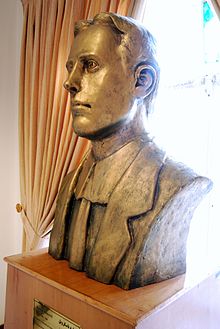
  You will be surprised to find out that one of the freedom heroes whose statue is erected in the "house of constitution of Tabriz" is a young American. He was visiting Tabriz as a teacher around 110 years ago. When he found out people of Iran were fighting for freedom, he got enthusiastic and insisted on fighting along with them.

PS. To learn more about this American hero in Tabriz read this article.

How to reach Tabriz

If you want to directly come to Tabriz from Europe, a convenient option is to change flights in Istanbul. There are regular flights from Istanbul to Tabriz airport. Information about flights to and from Tabriz airport can be found here. As you see, there are flights from Tabriz to other touristic beautiful cities of Iran like Isfahan, Shiraz, Kish,  Mashhad and Ahvaz as well as industrial and commercial sites in Iran like Asalooye and Mahshahr. There are direct flights to Tabriz from Dubai and Baku and a couple of other cities.

Of course there are also several flights to Tehran everyday from Tabriz but I want to suggest you another route to travel between Tabriz and Tehran which in my opinion for a tourist who wants to explore Iran is more interesting. There is a high-way between Tehran and Tabriz. Distance is about 700 km. It is not common in Iran to rent a car but there are very modern and comfortable buses travelling between Tehran and other major cities like Tabriz, Isfahan and Shiraz. You should ask for so-called VIP buses.

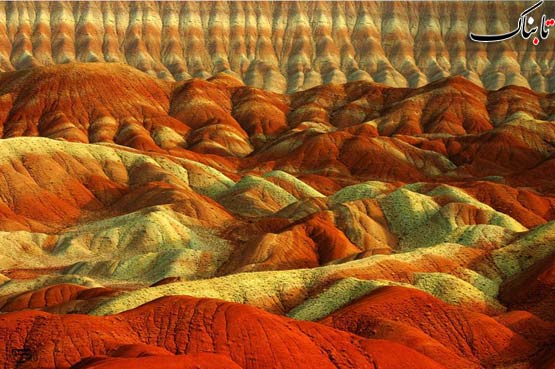
If you come from Tehran to Tabriz I suggest you to stop for a few days in Zanjan, too. Zanjan is a very beautiful city. It has interesting places to visit, including Soltanieh dome and Katale-khor cave.  From Zanjan to Tabriz if you take the high-way you will see the colorful hills such as the one below.

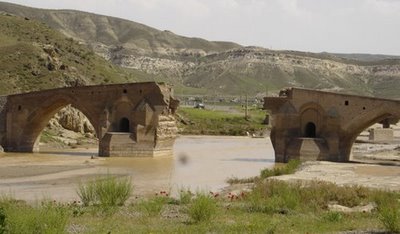
If instead of the highway you take the old road, you pass city of Miyane and you will encounter the following bridge which is known as "Ghiz Korpusi" in Azarbaijani Turkish which is also known as "Pole-dokhtar" in Farsi. Both mean "Girl's bridge." I do not know when and by whom the bridge is built in the first place but I know that a Tabrizi Princess in 14th century has had it repaired and maintained. In 14th and 15th century, Tabriz was the capital of Kara Koyunlu dynasty. Several monuments remain from that dynasty that have been commissioned by  queens and pricesses of that dynasty. There are even smaller ones donated by rich female merchans of that era.   Because of its strategic importance, the middle part of the bridge was exploded by a mine in 20th century after WWII.

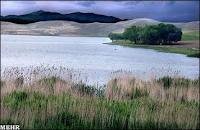
Closer to Tabriz you will visit this beautiful lake called "Ghuri Ghol."

From biological point of view, this lake is important. It houses 92 species of birds and several species of mammals and reptiles. Some of the birds emigrate to this lake from as far as Siberia. Some of these species are in the danger of extinction and are therefore protected. Last year a new bacteria was found in the lake. The bacteria was called "Alishewanella Tabrizica." Half jokingly, in honor of "Alishewanella Tabrizica", I celeberated by throwing a reception in my workplace which is a research institute of physics (not biology!)


Hasht-Behesht palace in Tabriz and Isfahan

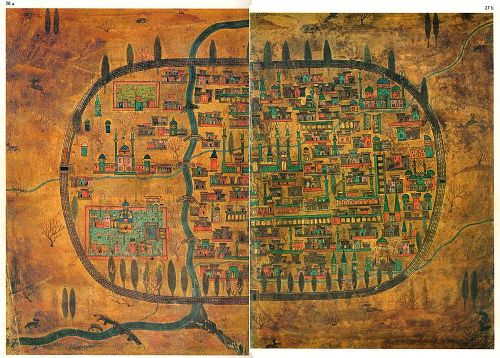
This is a map of Tabriz which is drafted about 500 years ago. This map is now in the Top Kapi museum is Istanbul, Turkey.

Based on the descriptions, I guess the large palace in the left bottom corner should be the famous Hasht-Behesht palace. Hasht-behesht means eight-paradises. (By the way, paradise is originally an Iranian word that has been imported to the European languages after Greek invasion of Persia. For detailed information on the etymology of the word, you may visit this website.) The great palace was founded by Uzun Hassan, the famous king of Agh ghoyunlu dynasty in 15th century. During this dynasty, Tabriz was the capital of the prosperous empire. Back then Tabriz was the fifth most populous city in the world (The first was Beijing.) Unfortunately, the palace does not exist anymore. It had been looted by Ottomans after the Chaldran battle and then was ruined by severe earthquakes that unfortunately hit Tabriz regularly once every two centuries or so.    However, exact description of the palace and its magnificent ornaments exist in the literature remaining from that era, including the travelogues of Venetian merchants (not Marco Polo!). In one od these descriptions, it was written that the palace is located on the other side of river and could be accessed from the rest of the city after passing bridges (as you see in the map above). (I am having doubts! Maybe the whole picture is just the map of the palace complex! I do not know. We should consult an expert! I am not a historian.)

In fact, Uzun Hassan had a christian wife  (the Greek princess of Trabuzan, named Despina) who had close ties with Venetians and accepted Venetian  delegates to her court so they had the chance during Despina's days in power (while she was a favourite with the king) to take a close look at the palace.

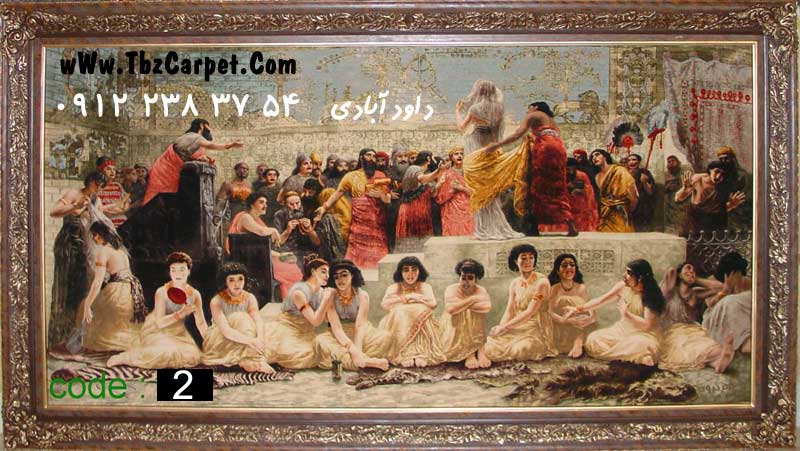
As I told you before, Tabriz carpet is very famous. Tabriz carpet comes in many different style. One of the styles is to depict long lost treasures and passages from old texts.  The following exquisite silk carpet is an example. As far as I know, it depicts a famous scene from old scripture describing a slave market in the antiquity.
 

source

I wonder why no attempt has been taken to depict and revive the lost glory of Hasht-behesht palace of Tabriz in carpets. Now that, thanks to the travelogues of the Venetian merchants of 500 years ago, we have the exact description of the palace, it should be feasible to depict it. I am sure such a carpet with the design of this long lost glorious palace will be very popular both among the locals and tourists.

Two centuries after founding this glorious palace in Tabriz, during the Safavid dynasty, the Capital was moved to Isfahan and another palace with the same name was built in Isfahan. This second Hasht-Behesht palace is well preserved and can be visited. For more information about the Hasht-Behesht palace in Isfahan you may visit this website.
 

Rose and Rosewater

As you may know, Muslim from around the world these days have gathered in Mecca for pilgrimage known as Hajj. The upcoming Friday is a religious holiday called "Qorban". May this holiday be a day of peace and friendship for all humankind!

According to the tradition to prepare for the great religious ceremony each year, Kaaba is washed with rosewater. Today the washing process is finished and the new covering is being installed. About 40 tons of pure  rosewater is consumed for this purpose.

The rosewater is produced in Iran in  a region close to the beautiful and touristic city of Kashan. Kashan is located about 250 km south of Tehran. For more information about Kashan you may visit this website. Each spring there is a famous rosewater ceremony close to Kashan that attracts tourists.
Roses and rosewater play a prominent role in Iranian culture. I have heard various legends showing the affections of both Prophet Mohammad (PBH) and Zoroaster to rosewater. However, I should say that these are merely legends and may not be historically  valid. Anyway,  these legends have contributed to high esteem that traditional Iranians show to this flower and its scent. Because of these legends in persian or Farsi (the official language of Iran) this kind of rose is called "Mohammadi." In my mother language (Azarbaijani Turkish which is the language spoken in Tabriz) it is called "Ghizil ghul" which literally means "gold flower." 


Rosewater is widely used for cookery and making traditional desserts and jams, each region of Iran with its unique  and specific style. I will write about its culinary uses in another post.

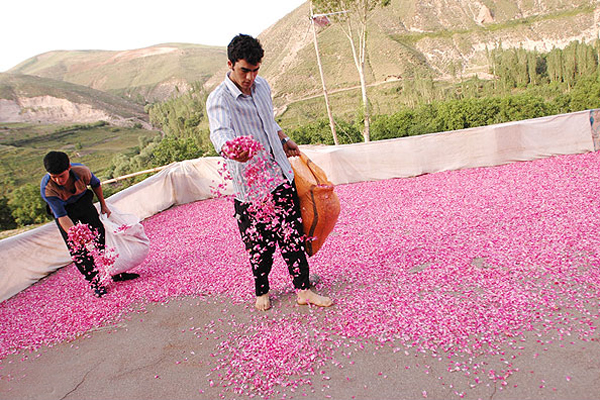
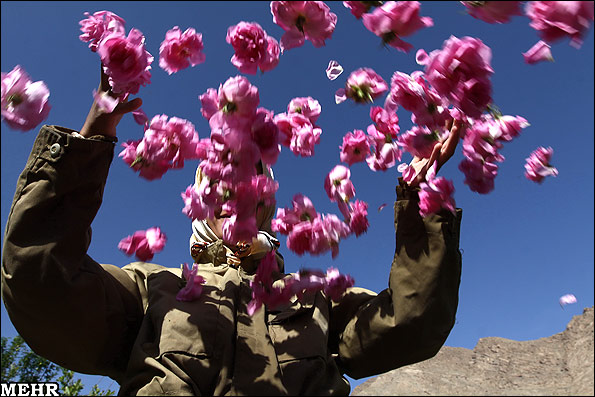
Here I want to mention about Rose festival in Ganbarf which is a region close to Tabriz and Oskoo. This festival takes place in July and also includes traditional music and performances. Photos below are related to this festival. The statue that you are seeing here is an archeological piece. I do not know how old it is. In the region of Ganbarf you can see many such ancient items.

source

source2

source3

source 4

Qaradagh

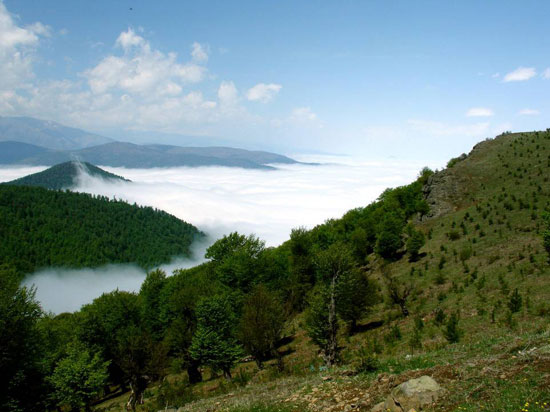
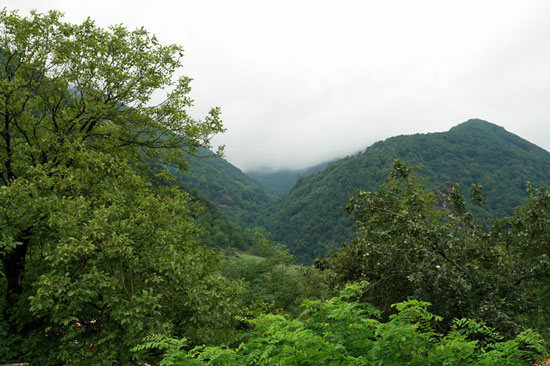
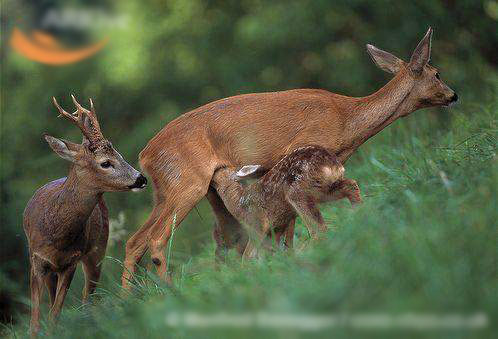
This area is called Qaradagh or Arasbaran and is  located close to Tabriz.

Since 1976 it is registered by UNESCO as biosphere reserve.

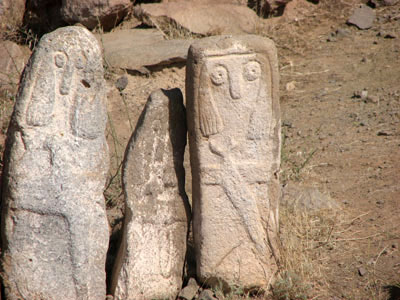
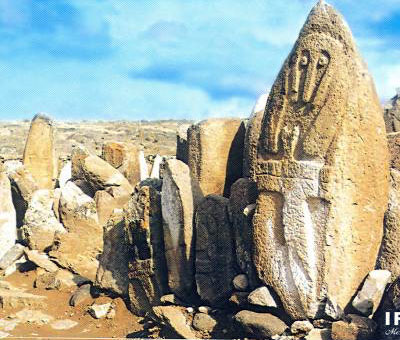
Comic  ancient statues


The comic statues that you are seeing are from an archeological site called Yer-Shahr located close to Meshkin-Shahr which is a town about 300 km north of Tabriz.. From Tabriz this city is accessible by a road. I just know that these funny looking statues are more than three thousand  and five hundred years old and date back to times when Aryans had not yet emigrated to the current day Iran. Some findings in this archeological site are about 7 thousand years  old. Unfortunately, I do not know more about them. I am truly curious to know more about them.

For more photos, you may visit this site

I wonder why these guys do not have a mouth?