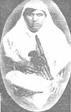
Zeinab Pasha, the great female justice fighter

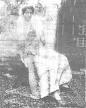
Photos that you see belong to a Tabrizi woman famous as "Zeinab Pasha" who about 130 years ago fought for the rights of the poor and social justice. She had trained an army of female partisans and commanded them. Her tactics, her courage, her determination for the cause of establishing social justice and her mercy on those opponents who repented are immortalized in several  long ballads composed in Azarbaijani Turkish (the language spoken in Tabriz).  
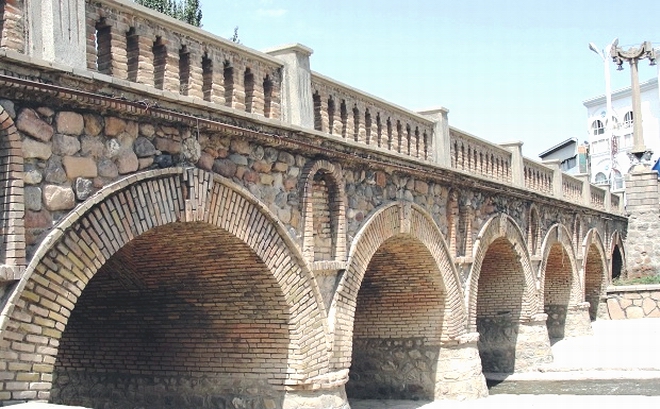
According to these ballads, Zeinab Pasha started her combat for justice from this bridge in Tabriz which is called "Ghaari Korpi." Ghaari in Azarbaijani Turkish means "old lady." According to the urban legends this old bridge is built under the auspices of an old anonymous lady who demanded to remain unknown. From my early childhood, for an unknown reason, I loved this bridge. Anytime I visit my hometown I try to take another look at it. When I was a child cars passed over it but now it is open only for pedestrians. There is another bridge next to it called "Mansure korpusi" which is decorated by some horse statues.
 

When Zeinab Pasha got old, she traveled to Iraq for pilgrimage. Over there, bandits stopped their caravan. Most of the pilgrims in the caravan were women. In the common male-dominated terminology,  it would  be rephrased as "the pilgrims in the caravan were merely defenseless women!" Anyways, Zeinab Pasha who had become an old woman at that time confronted the bandits and the bandits were scared off and  escaped, leaving the caravan intact.

There is a beautiful museum in Tabriz called "House of constitution." It is one of the "must-sees" in Tabriz. You may read about this museum in this link. Tabriz had played a prominent role in the constitutional movement which took place 100 years ago. If you are interested in knowing more about this movement, see for example this link.  Here you can find some books on this great movement in amazon.com. Actually one of them is entitled "Letters from Tabriz."

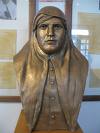
The following is the statue of Zeinab Pasha located  in "House of constitution" in Tabriz.
  You will be surprised to find out that one of the freedom heroes whose statue is erected in the "house of constitution of Tabriz" is a young American. He was visiting Tabriz as a teacher around 110 years ago. When he found out people of Iran were fighting for freedom, he got enthusiastic and insisted on fighting along with them.
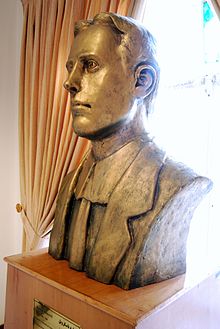
PS. To learn more about this American hero in Tabriz read this article.
Hasht-Behesht palace in Tabriz and Isfahan

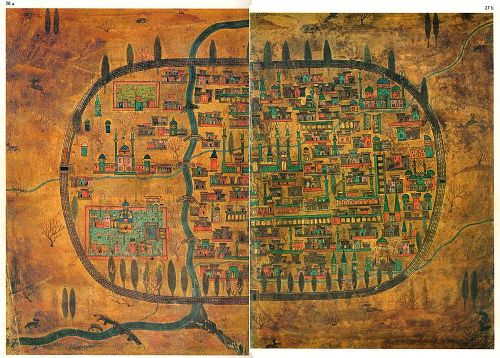
This is a map of Tabriz which is drafted about 500 years ago. This map is now in the Top Kapi museum is Istanbul, Turkey.

Based on the descriptions, I guess the large palace in the left bottom corner should be the famous Hasht-Behesht palace. Hasht-behesht means eight-paradises. (By the way, paradise is originally an Iranian word that has been imported to the European languages after Greek invasion of Persia. For detailed information on the etymology of the word, you may visit this website.) The great palace was founded by Uzun Hassan, the famous king of Agh ghoyunlu dynasty in 15th century. During this dynasty, Tabriz was the capital of the prosperous empire. Back then Tabriz was the fifth most populous city in the world (The first was Beijing.) Unfortunately, the palace does not exist anymore. It had been looted by Ottomans after the Chaldran battle and then was ruined by severe earthquakes that unfortunately hit Tabriz regularly once every two centuries or so.    However, exact description of the palace and its magnificent ornaments exist in the literature remaining from that era, including the travelogues of Venetian merchants (not Marco Polo!). In one od these descriptions, it was written that the palace is located on the other side of river and could be accessed from the rest of the city after passing bridges (as you see in the map above). (I am having doubts! Maybe the whole picture is just the map of the palace complex! I do not know. We should consult an expert! I am not a historian.)

In fact, Uzun Hassan had a christian wife  (the Greek princess of Trabuzan, named Despina) who had close ties with Venetians and accepted Venetian  delegates to her court so they had the chance during Despina's days in power (while she was a favourite with the king) to take a close look at the palace.

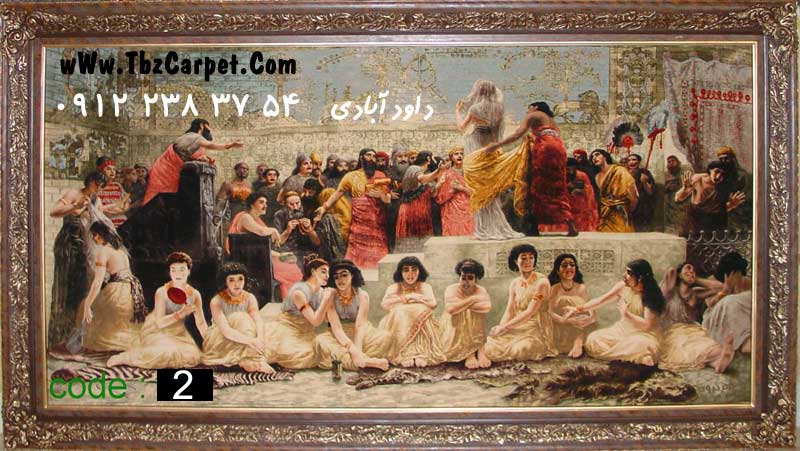
As I told you before, Tabriz carpet is very famous. Tabriz carpet comes in many different style. One of the styles is to depict long lost treasures and passages from old texts.  The following exquisite silk carpet is an example. As far as I know, it depicts a famous scene from old scripture describing a slave market in the antiquity.


source

I wonder why no attempt has been taken to depict and revive the lost glory of Hasht-behesht palace of Tabriz in carpets. Now that, thanks to the travelogues of the Venetian merchants of 500 years ago, we have the exact description of the palace, it should be feasible to depict it. I am sure such a carpet with the design of this long lost glorious palace will be very popular both among the locals and tourists.

Two centuries after founding this glorious palace in Tabriz, during the Safavid dynasty, the Capital was moved to Isfahan and another palace with the same name was built in Isfahan. This second Hasht-Behesht palace is well preserved and can be visited. For more information about the Hasht-Behesht palace in Isfahan you may visit this website.